The Moisture Adsorption Capacity of Calcium Chloride
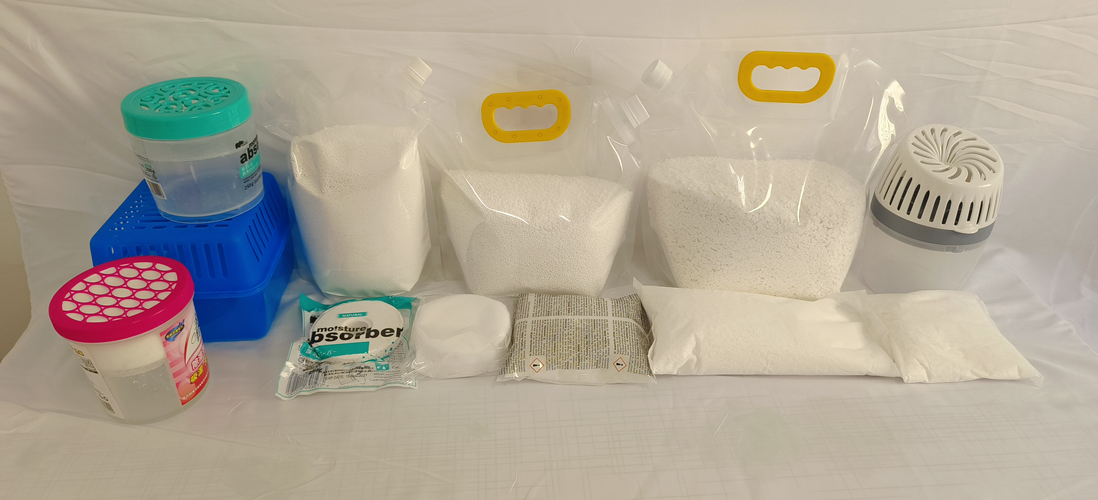
Calcium chloride, with the chemical formula CaCl₂, is a compound that exhibits significant moisture adsorption capacity. This property makes it widely applicable in various fields.
The moisture adsorption capacity of calcium chloride is a crucial characteristic. Studies have shown that it can absorb a considerable amount of moisture from the
surrounding environment. For example, in experiments like the single factor test and orthogonal test, it was found that the moisture absorption capacity of calcium chloride plays a vital role in optimizing the formula of certain product, such as chicken flavor.
When compared to other substances, calcium chloride often shows superior moisture adsorption capabilities. For instance, when compared to bamboo pulp fiber, it has a higher hygroscopic capacity. However, it's important to note that bamboo pulp fiber has some advantages in other aspects, such as a faster drying speed.
The applications of calcium chloride based on its moisture adsorption capacity are diverse. It is commonly used in deicing, as a desiccant, and in various industrial
processes. In the field of drying agents, calcium chloride is one of the commonly used options. Its performance in terms of moisture absorption and drying speed is notable.
Moreover, the regeneration of calcium chloride after moisture adsorption is also an important aspect. Different methods of regeneration are applicable depending on the specific conditions. For example, it can be regenerated by drying at 200°C.
In conclusion, the moisture adsorption capacity of calcium chloride is a significant property that has wide-ranging applications and influences in multiple fields. Understanding and harnessing this property effectively can lead to more efficient and practical uses of
calcium chloride.